Animals for Off-Grid Living: Livestock That Pull Their Weight on a Homestead
Discover the best animals for off-grid living and which livestock truly pull their weight on a homestead. From chickens to goats, learn how the right animals can provide food, fertilizer, and real self-sufficiency.
ANIMALS
Hey, it's me, Harold. Some of the links on this site are affiliate links, which means I might earn a small commission if you click through and make a purchase — at no extra cost to you. The humans call this "monetization." I call it "finally getting paid after decades of free publicity."
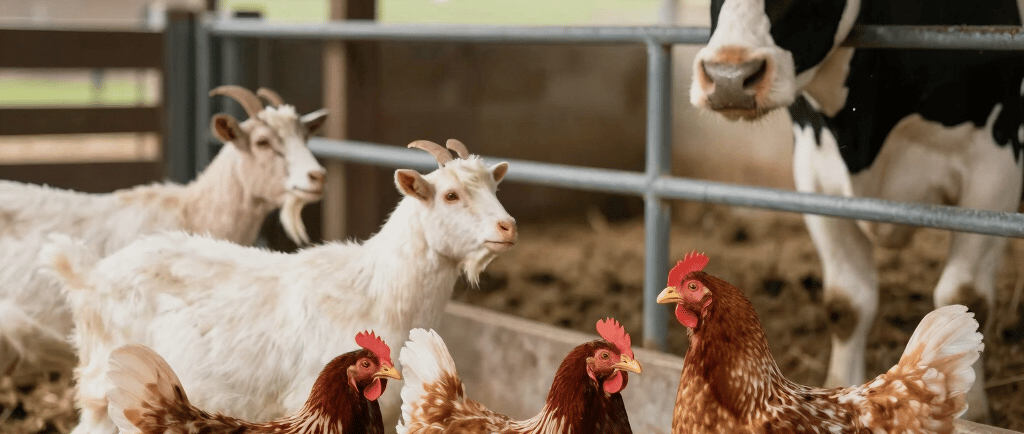
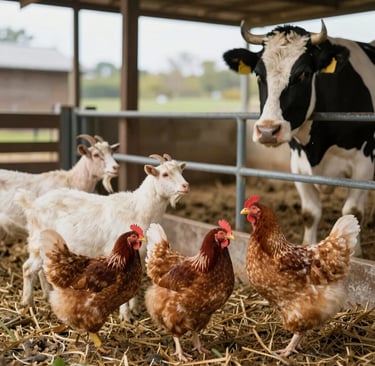
Let me be clear about something: I don’t have a mortgage, I don’t own a single chicken, and I still eat better than most of you. But I’ve got to admit—watching humans decide to move off-grid and start raising animals is genuinely fascinating. It’s like you’re all collectively remembering that before the grocery store, before the grid, before the subscription services, there was just… land. Animals. Work. And people figuring it out.
The difference between watching you garden and watching you raise animals? Animals have opinions. They escape. They require actual daily commitment, not just weekend enthusiasm. And somehow, that’s what’s making this whole off-grid thing finally click for people.
The Off-Grid Awakening: “Wait, I Can Just… Live Here?”
What’s happening right now is pretty cool, honestly. Humans are realizing that you don’t need to be fully dependent on city infrastructure, utility companies, and the fragile supply chains that everyone’s suddenly nervous about. You can actually live somewhere. Build something. Be somewhat self-sufficient.
Off-grid living isn’t some extreme survivalist fantasy anymore. It’s a realistic choice: maybe you want land that doesn’t require an HOA inspection. Maybe you want to know where your food comes from. Maybe you just want to own your own water, electricity, and maybe a goat.
The exciting part is watching people figure out that off-grid doesn’t mean “alone in the woods eating bugs.” It means creating a system. A functioning ecosystem on your property that produces food, manages waste, and gives you a level of independence that feels genuinely good.
And that’s where animals come in.
Why Animals? The Ecosystem Question
Here’s what I’ve watched happen: people start with gardening (you’ve all read about that). They grow tomatoes. They feel good. Then they realize something:
“Wait… I have all this compost waste. I have grass growing. I have space. What if… I got some animals?”
And that’s when off-grid living stops being a hobby and starts being a system.
Animals create closed loops. Chickens eat your kitchen scraps and produce eggs. Goats eat vegetation and produce manure. Rabbits breed prolifically and provide meat. Bees pollinate your garden and make honey. Cattle or sheep can manage land while producing milk, meat, or wool.
This is systems thinking. This is ecology as actual practice, not theory.
I’ve watched humans get this idea and something clicks in their minds. Suddenly they understand why I don’t need a job. Not because I’m special—because everything’s connected. The garden feeds the animals. The animals feed the people. The waste cycles back to the garden.
It’s been working for millennia. Now you’re all figuring it out.
The Reality Check: Animals Aren’t Decorations
Here’s where I need to be honest with you, because I’ve watched a lot of people mess this up:
Animals require commitment. Daily commitment. Not “when I feel like it” commitment. Not “I’ll hire someone to do it” commitment. Not “Instagram photo opportunity once a week” commitment.
Chickens need water every single day. In winter when it’s freezing and you’d rather be inside. In summer when it’s scorching and you’d rather be literally anywhere else. When you’re sick. When you have a hangover. When you’re on vacation and really hope your friend actually remembers to feed them (they won’t). They need their coop secured or a fox will solve your chicken problem permanently—and turn it into an expensive lesson about predators.
Goats are escape artists with engineering degrees and a philosophical opposition to boundaries. They’re also hilarious and surprisingly affectionate, which is why people love them despite the fact that they will eat your fence, your garden, your laundry off the line, and possibly your sanity. I watched one goat get into a human’s house and somehow make it to the second floor. The human was not amused. The goat was very pleased with itself.
Larger animals like sheep, cattle, or horses? They require land management, veterinary knowledge, and a genuine understanding of rotation grazing. You can’t just put them somewhere and hope. “Hope” is not a management strategy, despite how many humans try to make it work.
This is the moment where people get real about off-grid living. It’s not romantic until it is—until you realize that the animals depending on you means you actually have to show up. Even when you don’t want to. Even when you’re tired. Even on your birthday.
Some people get chickens and think “cute eggs! So easy!” and then realize in week two that they’re cleaning a coop every morning whether they want to or not. Some people discover they love it. Some people develop a deep, personal hatred of poultry and decide they’re better as online observers of other people’s farm life while they order eggs from the store and pretend that’s more convenient.
Both are valid choices. But you need to know which one you are before you bring animals home. Not after. Not when you’re standing in front of a confused goat you bought on impulse.
Poultry: The Gateway Animal
Chickens are where most people start, and honestly? It’s a smart move. They’re the methadone of off-grid living—a gateway to bigger commitments without immediately wrecking your life.
A backyard flock of 3-6 chickens can provide more eggs than a household needs, they’re relatively low-maintenance compared to larger animals, and they’re genuinely entertaining to watch. They have personalities. They’re dumb in charming ways. They’ll follow you around hoping for treats like tiny dinosaurs with very simple brains and very strong opinions about snack distribution.
You get actual benefits without the scale that requires constant decision-making and a spreadsheet. Fresh eggs. Pest control (they eat bugs, slugs, ticks—basically everything you don’t want). Free fertilizer (that manure is actually valuable, which is wild when you think about it). Companionship and chaos in roughly equal measure.
I’ve watched humans experience their first fresh egg and taste the difference between that and the industrial-farm version sitting in a grocery store for who-knows-how-long, and they always have the same realization: “Oh. This is what food is supposed to taste like.” Then they wonder why they can’t ever go back to store eggs without being disappointed. (Welcome to the problem, human.)
Ducks and geese are similar in concept but with important catches: they’re messier (water everywhere), noisier (especially geese, which sound like small angry dinosaurs), and more prone to wandering toward literally any body of water and ignoring your plans. Turkeys are basically annual crops if you want meat and don’t want to keep them year-round. Quail are small and efficient if you want to maximize space in a tiny urban backyard.
But chickens? Chickens are the gateway animal that actually leads somewhere productive instead of leading you to regret your choices.
Larger Animals: Goats, Sheep, and the Commitment
Once someone’s handled poultry for a season and understands the rhythm of animal care, they sometimes think bigger. Sometimes this is wisdom. Sometimes this is hubris.
Goats are hilarious. Genuinely hilarious. They’re intelligent, playful, and affectionate if you raise them right. They eat vegetation that chickens won’t touch. They produce milk you can turn into cheese and yogurt. Some people eat them. Some people just keep them for land management and because they’re the funniest thing on their property and worth the chaos.
They’re also escape artists with the planning ability of a special ops team and the conscience of a toddler. They’re destructive in creative ways you won’t anticipate. They require actual shelter, pasture rotation, and veterinary care. If you think “I’ll just let them roam,” you will find them in your garden, your neighbor’s garden, eating your siding, on top of your car, inside your garage, and somehow in your second-floor bathroom despite having no obvious way to get there. (One did this. The human involved is still not over it.)
Sheep are similar but less aggressively destructive. They’re grazers that can manage pasture better than goats, they produce wool and meat, and they’re generally less interested in escaping to prove they can. They also require actual land and pasture management because they’re not going to organize that themselves despite what you might hope.
Cattle require the most commitment. You need real pasture, infrastructure, veterinary knowledge, and the ability to handle animals that weigh 1,000+ pounds and have opinions about your life choices. But they’re incredibly efficient at turning grass into meat or milk—which is satisfying in a systemic way once you accept the responsibility.
What I’ve noticed: people who get serious about off-grid living almost always progress through animals in order of commitment. Chickens first. Then maybe goats or rabbits. Then maybe sheep if they have real land and actual follow-through. The ones who jump straight to cattle usually end up disappointed because they watched some homesteading YouTube video at 2am and didn’t think the plan through. The ones who start small and build—genuinely understanding each step—get real satisfaction.
It’s the difference between “this seems cool” and “I actually understand what I’m doing here.”
Rabbits and Other Small Stock: Maximum Efficiency
Rabbits are the underrated animal in off-grid living. They’re basically the efficiency MVPs of homesteading, and yet everyone’s out here getting goats for Instagram.
They breed constantly. Aggressively. Like, faster than you might expect if you’re not paying attention. You can raise 3-4 generations in a year, which is either amazing or terrifying depending on whether you like rabbit meat. They’re quiet (they won’t annoy your neighbors). They don’t require much space. They eat vegetation and hay. Their manure is incredible for gardens—genuinely among the best fertilizer you can get. And if you’re comfortable with it, they’re an efficient meat source that doesn’t require the infrastructure of larger animals.
I’ve watched humans realize rabbits are the most efficient calorie-to-effort ratio on a small property, and suddenly they understand why they’re so common in homesteading circles. The only problem is they’re not as photogenic as goats, so fewer Instagram posts happen. (This is actually not a problem for the rabbits, who have opinions about being photographed that roughly match mine.)
Bees are similar in the efficiency department but different in literally every other way: they require minimal feeding (they feed themselves, mostly), they pollinate everything (making your garden exponentially more productive), and they produce honey, beeswax, and propolis. The barrier to entry is usually knowledge, not space or time. And bees are genuinely good for the world, which is nice for once.
Larger animals like alpacas, llamas, or pigs can work depending on your goals and space, but they’re more niche and require more specific infrastructure. The small stock—rabbits, poultry, bees—these are where the real efficiency lives on a small property. These are the animals that let you test your commitment before you end up with cattle.


Integration: Where Animals Meet Gardens (and Everything Works)
This is where it gets genuinely beautiful to watch:
The animal manure enriches the compost. The compost feeds the garden. The garden scraps feed the animals. The animals produce eggs, meat, milk, wool, honey. The human eats, stays warm, and the cycle continues. It’s not magic, but it feels close to it the first time you really see it working.
It’s not complicated ecology—it’s just how life works when you stop treating everything as separate systems and start thinking about them as connected. Which sounds obvious until you realize that’s literally the opposite of how modern life is structured.
I’ve watched gardens fail that would have thrived with animals because there was no nutrient cycling. I’ve watched people get frustrated with animal waste until they realized it was an asset, not a liability—suddenly their “manure problem” became their “fertility solution.”
The off-grid systems that work are the ones where nothing gets thrown away. Everything cycles. The humans maintain it, understand it, and work with it instead of working against it. And when something clicks and the system starts feeding itself? That’s when people really get it.
The Mindset Shift: Dependency and Reliability
Here’s what genuinely moves me about watching this: off-grid living with animals requires you to be reliable. Not occasionally. Not when you feel like it. Reliably.
You can’t decide that today you don’t feel like taking care of animals. You can’t outsource it. You can’t automate it (not really). You can’t call someone and ask them to handle it because the animals’ needs don’t care about your work schedule or your mood. Something depends on you actually showing up. Every day.
That’s a fundamentally different relationship with your own life. You become less autonomous in some ways—bound to daily feeding, watering, shelter maintenance, the endless problem-solving that animals generate. But you become more autonomous in others—less dependent on external systems, more capable, more connected to actual reality instead of just existing in comfortable abstraction.
The people who stick with it report something interesting: they become more patient. More observant. More present. Off-grid living with animals forces you into the moment in a way that most modern life actively prevents. You can’t be half-paying attention while scrolling on your phone. The animals don’t care about your mental state or your existential concerns—they need food and water and they need it now.
It’s honestly kind of healthy. Which is why a lot of burnt-out people end up doing this and then realizing they finally feel like they’re actually living instead of just managing emails and scrolling through other people’s versions of living.
The Real Requirement: Land and Resources
I need to be honest about something: off-grid living with animals requires actual resources.
You need land. Maybe not a ton of land depending on what you’re raising, but real land. With proper water access. And shelter. And ideally, some way to produce or store feed. This is not negotiable. You cannot run a successful homestead on vibes and optimism, no matter how positive your attitude is or how many motivational quotes you’ve saved.
In a drought year, a well goes dry. In a harsh winter, animals need more shelter and feed than you anticipated. In the summer, predators show up like they’ve read your homesteading blog and decided to personally spoil your self-sufficiency fantasy. This is nature saying “nice try, but here’s how systems actually work.”
The fantasy of off-grid living is “I can just live anywhere with my animals, self-sufficient and free and maybe with a photogenic sunset in the background.” The reality is “I need specific conditions, good water access, productive soil, and actual knowledge to make this work, plus I need to understand what can go wrong so I can prepare instead of just hoping.”
People who succeed at off-grid living with animals usually spent time understanding their land first. The climate. The water table. The soil conditions. The predators (usually coyotes, sometimes neighbors, occasionally your own lack of fencing). The seasonal challenges. Then they adjusted their animal choices and systems to that reality instead of trying to force their Instagram dream onto land that wasn’t ready for it.
The people who show up with an idea and expect nature to cooperate because they read a book or watched some YouTube video? They get educated quickly. Sometimes painfully. Sometimes in ways that involve veterinary bills and angry neighbors. Nature is patient but unforgiving—kind of like me, actually.
Community: The Hidden Off-Grid Asset
One thing I’ve observed that people don’t expect: successful off-grid living often involves community. Turns out being off-grid doesn’t mean being alone—which is good, because isolation gets weird fast.
You share equipment (nobody needs their own tractor if there are six families who could borrow it). You barter. You trade eggs for honey for vegetables for help building a structure for someone else’s labor on your fencing project. You have someone check on your animals when you travel (critical, since they don’t understand vacations). You learn from people who’ve been doing this longer, which saves you from expensive mistakes and saves your sanity.
The mythology of off-grid living is very “lone wolf against the wilderness, needing nobody, asking for nothing.” The reality is “connected to people who understand what you’re trying to do and can tell you when your goat is about to escape through a gap you didn’t notice.”
I’ve watched people move off-grid and discover that the isolation they feared didn’t happen because they actively built community. They joined local farming groups. They attended workshops. They became part of a network. And suddenly off-grid living went from “this is hard and lonely” to “this is hard but we’re all doing it together.”
Off-grid living with animals actually pushes you into more local connection, not less. Which is funny, considering most people do it partly to escape the rat race. Turns out you just end up trading rat-race stress for rural-community cooperation. (Which is honestly a better deal.)
The Big Picture: What Off-Grid Living Actually Offers
Off-grid living isn’t about rejecting society or becoming entirely independent (that’s mostly fantasy—most off-gridders still use money and the internet). It’s about creating resilience. About understanding your systems instead of just hoping they work. About owning your own resources and taking responsibility for them instead of just writing a check and hoping someone else handles it.
It’s about being less dependent on fragile supply chains that everyone suddenly got nervous about, and more dependent on your own knowledge and effort. Which sounds harder (and it is, some days), but also feels less vulnerable.
It’s about the realization that you can make things happen. You can live somewhere. You can raise animals. You can grow food. You can be part of the system instead of just consuming from it while scrolling through TikTok.
And honestly? There’s genuine dignity in that. There’s something fundamentally satisfying about understanding how your life actually works instead of it being a mystery handled by distant corporations.
The people who get serious about off-grid living—combining gardens, animals, water systems, and energy management—they’re not crazy or fleeing society. They’re figuring out something real about what living actually means. And they’re usually the people in your community who show up when things get hard, because they’re already used to actually solving problems.
The Takeaway
Off-grid living with animals isn’t something you do to escape. It’s something you do to build something. To understand something. To participate instead of just passively consuming.
You don’t need a sprawling homestead. You don’t need to move to the middle of nowhere (though some do). You don’t need to quit your job tomorrow (though be prepared for the desire to grow).
You need realistic expectations. You need land with good water. You need to start small and actually understand each system before expanding instead of just optimistically acquiring animals. You need to understand your climate and choose animals that fit it. You need to be willing to fail, learn, and try again. You need to accept that sometimes the system fails regardless of your effort (droughts happen, predators exist, animals get sick) and you handle it.
Most importantly, you need to understand that animals are actual living beings that depend on you. Not props. Not Instagram content. Not cute additions to your aesthetic. Actual creatures that need food and shelter and care regardless of your mood, your schedule, or whether you’re tired of the commitment.
But if you’re willing to show up? If you’re willing to work in actual dirt and feed actual animals and build something real, even when it’s inconvenient?
Nature will work with you. You just have to learn the language. And show up tomorrow. And the day after that.
-----
**Harold has been observing human civilization — and occasionally consulting with unattended livestock — from the woods for several centuries. He has strong opinions about animals, sustainability, and the importance of actually reading your land before making plans. The chickens, for the record, have even stronger opinions and are not shy about sharing them.
He has seen empires of backyard flocks rise and fall. He has watched goats escape enclosures that took grown adults three weekends to build. He has witnessed the quiet dignity of a well-kept rabbit hutch and the absolute chaos of one that wasn't. The sheep know things. Harold knows the sheep. It's a whole thing.
Find him in the woods, probably critiquing your coop ventilation while the goat you thought was secured trots past in the background. He is not available for podcasts or consultations. He is reachable if you leave a granola bar at the northeast corner of the forest — though the chickens will probably get to it first. They always do.

© 2026. All rights reserved.