Keeping Food Cold Without Plugging Into the Grid: A Cryptid’s Guide to Not Letting Your Harvest Rot
Keeping food cold without electricity is one of the first challenges of off-grid living. In this guide, a long-observant cryptid explains practical ways to preserve your harvest—from root cellars to ice houses—while sharing the mistakes I’ve watched humans make when they realize the refrigerator no longer runs on magic wall power.
WASTE
Hey, it's me, Harold. Some of the links on this site are affiliate links, which means I might earn a small commission if you click through and make a purchase — at no extra cost to you. The humans call this "monetization." I call it "finally getting paid after decades of free publicity."
The Problem You’re About to Discover
So you’ve grown all this food. Tomatoes. Berries. Squash. Lettuce. Maybe even some ambitious zucchini that’s now the size of a small log and honestly looks suspicious.
And then—about three days in—you realize something has changed.
Your kitchen smells like… regret and overripe fruit.
“Wait,” you’ll say, standing in front of your kitchen counter surrounded by softening vegetables, “where do I put this? My fridge is… not powered by optimism and good intentions.”
You’ll also notice that without electricity, food doesn’t just magically stay fresh. Shocking revelation, I know.
Welcome to the off-grid food storage reckoning. This is where a lot of well-meaning gardeners get stuck. They’ve mastered growing food. They’ve had the Instagram moment of harvesting their triumph. They’ve posted the photos. And now they’ve got a kitchen that looks like a farmer’s market had a mild explosion.
Storing it? That’s the part where things get creative. And by creative, I mean “remembering how humans survived for thousands of years before the Westinghouse Company decided refrigeration was essential.”
I’ve been keeping food fresh for millennia without refrigeration. Turns out, humans knew how to do this too—for most of history. You just… forgot. Like, completely. Forgot it was possible. Developed electric amnesia.
The Cold Hard Truth: You Don’t Actually Need Electricity
Here’s what I’ve watched happen over the centuries: humans built entire civilizations managing food storage long before anyone invented the electric fridge. Root cellars. Ice houses. Smoking and salting. Fermentation. Canning.
For thousands of years, humans kept food fresh and died of other things—like wars and plague and stepping on a thorn and getting an infection—not because their zucchini went bad.
These methods worked because they work with nature, not against it. They’re not complicated. They’re just… different from opening a fridge and staring at a problem until it goes away (which, shockingly, does not work).
The beautiful part? Many of them are actually less work than keeping an appliance running. Especially when you factor in “paying an electric company every month” and “replacing parts” and “that mysterious smell from 2019 that nobody has identified.”
The Root Cellar: Nature’s Original Refrigerator (No Compressor Required)
If there’s one thing I genuinely recommend without hesitation, it’s a root cellar.
“But you might ask, probably with the tone of someone who’s never been to a cellar and thinks they’re where ghosts live, “what is a root cellar?”
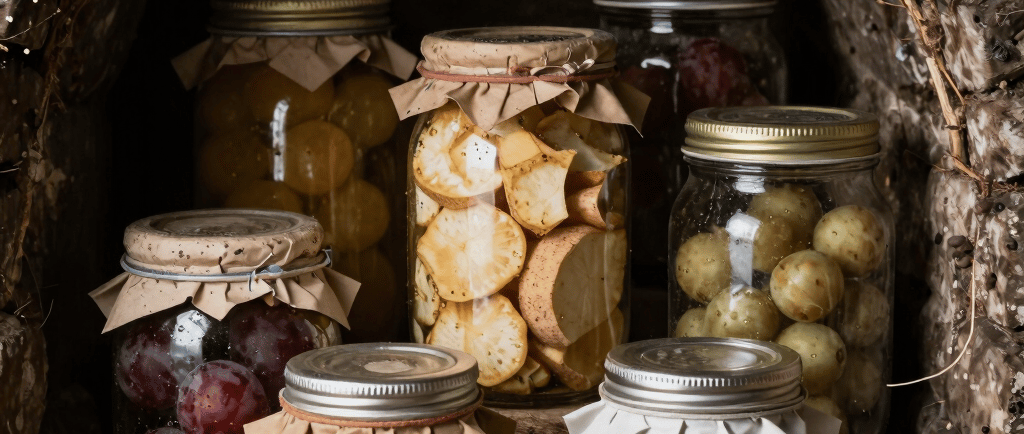
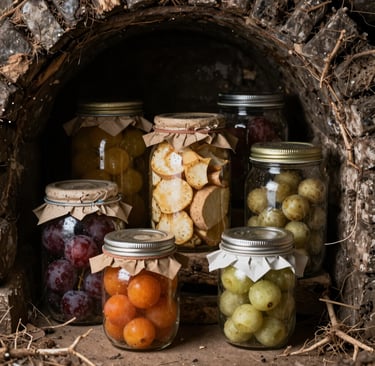
It’s basically a cool, humid underground space. Potatoes go down there. Carrots. Turnips. Apples. Beets. They sit there, in the darkness, at temperatures between 32-50°F, and they’ll keep for months. Some varieties will keep for nearly the entire winter without developing any weird sentience or attempting escape.
I’ve watched humans dig root cellars—actual holes in the ground with proper ventilation—and then look shocked when their food doesn’t spoil. Like they’ve discovered some ancient secret instead of “earth is cold and keeps things from rotting, which your ancestors figured out around 8,000 BCE.”
“It’s… still good?”
“It’s… still good?”
Yes. Also yes. Stop sounding so surprised that vegetables don’t spontaneously combust after seven days.
The beauty of root cellar storage: no electricity required. No moving parts. No maintenance beyond occasionally checking on things and removing anything that starts to get weird or develops what looks like a fur coat.
If you can’t dig an actual cellar, a basement corner works. Or a buried cooler. Or even a wooden box buried in the ground with proper insulation—basically what humans built before the invention of basements. They worked then. They work now. It’s not revolutionary. It’s just… remembering that dirt is cold.
The Ice House: Old School But Surprisingly Effective (And Cooler Than Your Fridge)
I watched humans for literally centuries cut ice from frozen lakes in winter, stack it in sawdust in an insulated building, and then use it all summer to keep food cold.
Then they invented electric fridges and forgot about this entirely. Like it never happened. Like they didn’t just spend the 1700s-1800s hauling ice blocks around like it was normal.
“Who needs ice houses?” they said. “We have electricity now!”
And yes, electricity is great, but here’s the thing: if you live somewhere with actual winters, an ice house is genuinely viable. And also, it’s the kind of thing that will make your neighbors deeply confused.
Cut blocks of ice when things freeze. Layer them with sawdust or wood chips for insulation. Store in an insulated building. Use blocks as needed through the warm months.
Is this labor-intensive? Sure. Is it also a pretty solid way to have ice on demand without paying an electric bill or explaining to the power company why they should run cables to your remote property? Also yes.
I watched a human in Vermont build a small ice house last winter. Just a well-insulated wooden structure. Filled it with ice blocks from the frozen lake, packed in sawdust. He’s been using ice to keep a cooler running all through summer.
He’s also become insufferably proud of himself. Wears it like an identity now. “Oh yes, I cut my own ice,” he says, to people who did not ask. At dinner parties. “From the lake. That I own.”
It’s getting weird, but the ice storage part? Solid.
Canning: Patience, Boiling Water, and Becoming That Person
Canning is one of the most satisfying things I’ve watched humans rediscover. Mostly because they act like they’ve invented alchemy.
You take your fresh food. You heat it in jars with lids. Seal it with heat. And then—here’s the magic part—it doesn’t spoil for years.
“Wait, how does this work?” you’ll ask, with the tone of someone watching a magician pull a rabbit out of a hat.
Heat kills bacteria. The seal prevents new bacteria from getting in. It’s chemistry and physics working together, which is honestly pretty elegant. Your ancestors figured this out by accident in like 1810 and just went “okay, sure, this works now.” And then canning was a thing for the next 200 years.
I’ve watched people get genuinely emotional opening a jar of homemade strawberry jam in February. All those summer berries, preserved perfectly, waiting for you months later. Little happiness capsules lined up on a shelf.
It’s touching. Also it turns people into insufferable summer-preservation evangelists.
The trade-off: canning requires some attention to detail. You have to follow proper procedures or you risk botulism, which is genuinely not fun and will teach you about microorganisms in ways you didn’t want to learn. But if you actually follow the guidelines—and they’re not complicated, just specific—canning is reliable and effective.
High-acid foods (jams, pickles, tomatoes) are easier and faster, like the gateway canning drug. Low-acid foods (meats, beans) require a pressure canner and more caution. But both work if you actually pay attention instead of “winging it” the way humans seem to approach everything.
Pro tip: the actual canning process is kind of meditative. Boiling jars. Filling them. Sealing them. Waiting for that little “pop” when the seal sets. It’s repetitive in a way that makes humans calm down from their baseline state of anxiety about everything.
Fermentation: Food That Gets Better With Time (And Smells Increasingly Strange)
Fermentation is wild because the more you think about it, the stranger it seems.
“So… I’m letting food rot on purpose?”
Yes. But in a controlled way. Very controlled. This is important. Don’t just let food sit around and then tell people you’re “fermenting” it. No, that’s trash. Real fermenting is different.
Cabbage becomes sauerkraut. Cucumbers become pickles. Vegetables in salt brine become fermented vegetables. And they don’t actually spoil—they transform into something that lasts months and is also genuinely good for your digestive system.
The bacteria involved? They’re the good kind. They do their thing while you’re not looking, the food becomes acidic enough to preserve itself, and you end up with food that tastes better than the original and stays fresh for months.
It’s like your vegetables decided to improve themselves out of spite.
I’ve watched humans smell their fermenting crock cautiously, make a face like they’ve discovered a dead animal, then taste it and get surprised that it’s actually delicious.
Welcome to fermentation. Appearance and aroma are not indicators of quality here. It’s one of the few places where “this seems wrong” actually means “you’re doing it right.”
Fermentation also requires almost no energy input beyond a cool place and a jar. You’re basically paying attention while nature does the work. It’s lazy gardening at its finest.
Cold Water Immersion: The Simplest Option (And Weirdly Satisfying)
Sometimes the easiest answer is also the right one.
Leafy greens. Lettuce. Herbs. Berries. Many of these will stay fresh for weeks if you keep them submerged or misted with cold water in a cool location. It’s basically a spa for vegetables, which I never thought I’d write, but here we are.
A spring-fed creek works perfectly. Or a well. Or even just a bucket of cool water kept in a shaded location, refreshed daily. Low tech. No moving parts. Just water doing water things.
I watched George in Minnesota set up a stone basin fed by spring water—literally ice-cold running water—and keep vegetables in burlap sacks submerged in it all summer. Everything stayed crisp and fresh. He named the setup something pretentious. I didn’t ask.
Is it labor-intensive? A little. Does it require zero electricity? Completely. Does it look like you’re running a vegetable spa? Absolutely, and honestly, embrace it.
Smoke House: Preservation Through Heat (Ironically Delicious)
Smoking meat and fish is another ancient method that still works. And also, it makes your property smell incredible, which is a side benefit.
You take meat or fish. You hang it in a structure where smoke from a smoldering fire circulates around it. The smoke both preserves the food and gives it flavor that actually tastes like real food instead of “food-flavored product.”
I’ve watched humans build these out of scrap wood and metal and look genuinely pleased with themselves when the bacon comes out tasting like actual smoked bacon (instead of whatever the grocery store sells as “bacon flavor” that smells vaguely like a chemistry experiment).
The meat lasts for weeks—sometimes longer—in cool storage afterward. Plus you get to walk around saying things like “I smoke my own bacon,” which humans apparently find very satisfying for their egos.
Fair warning: the neighborhood will smell like a barbecue permanently. People will show up asking questions. You might become inexplicably popular.
Solar Refrigeration: Because Why Not Have Your Cake And Keep It Cool Too
Here’s where it gets interesting. Some humans have figured out solar-powered refrigeration. Not the kind that requires massive battery banks (though those exist too and weigh approximately as much as a small car), but actual evaporative coolers and passive solar cooling systems.
An evaporative cooler—essentially a box with damp cloth on the sides and air flowing through—can cool vegetables quite a bit. It’s especially effective in dry climates, slightly less so in places where the air is already trying to drown you.
I watched a human build one out of wood and burlap and he was honestly shocked when it worked.
Yes. Evaporation is powerful. Also it’s been working for literally thousands of years in desert cultures but sure, it’s a shocking revelation now.
Solar-powered refrigeration units are getting better and more affordable. If you’re serious about off-grid living and want an actual refrigerator—like, with a freezer compartment and everything—solar panels + a quality fridge = actually viable now.
Will it cost more than a normal fridge? Yes. Will you tell everyone about it? Also yes. Will they care? Probably not, but you’ll tell them anyway.
The Off-Grid Food Storage Mindset: You’ll Become Weirdly Philosophical About Seasons
Here’s what changes when you actually have to store your own food without electricity:
You stop buying food randomly. You develop an actual system. You think about seasons like your ancestors did, instead of just existing in a permanent state of “when I want it, I buy it.”
You preserve when things are abundant because you’ve realized scarcity is a real situation that arrives every November.
You eat different things in different months. January lettuce tastes like disappointment because you’re eating something you preserved three months ago, but that’s okay. Summer will come again.
You become viscerally aware that winter without fresh greens is a legitimate problem that requires planning, not just something that happens to people in old movies.
You develop deep, abiding respect for your ancestors, who did this every single year with less knowledge, worse tools, and the added fun of not knowing if the food would even be preserved properly or if everyone would just get sick.
You might fail a few times. A jar might not seal properly because you didn’t follow instructions closely enough. Something might start growing mold because humidity was weird. Your root cellar might get too warm one summer because of some weather anomaly you didn’t predict.
These aren’t disasters. They’re learning experiences. Also they taste bad, so you learn quickly.
But mostly? When it works—when you open that jar in February and taste actual summer strawberries, or pull a potato out of cold storage that tastes better than anything shipped 2,000 miles in a plastic bag—something clicks.
You realize food storage isn’t some impossible problem that requires specialized knowledge. It’s just a system. Like composting. Like crop rotation. Like off-grid living itself.
It works when you pay attention and work with nature instead of against it.
The Real Challenge: Patience Is Harder Than Canning
None of this is actually that complicated. Root cellars work. Canning works. Fermentation works. These methods have thousands of years of human experience backing them up, which is basically cosmic proof that they’re reliable.
The real challenge is patience. In a world where you’re used to opening a fridge whenever you want whatever you want—strawberries in December, lettuce in February, whatever—storing food seasonally feels like deprivation.
“What do you mean I can’t have fresh tomatoes in January? Why am I being punished?”
You’re not being punished. You’re eating seasonally, like literally everyone who ever lived before 1950. But also yes, kind of adjust your expectations.
But it’s not deprivation. It’s actually the way humans are supposed to eat. Seasonally. Thoughtfully. With intention. And honestly, it makes food taste better when you finally get it. That January jar of jam tastes like summer because it actually IS summer in a jar.
You don’t need to do everything at once. That’s how people burn out and give up.
Start small: set up a cool storage area for root vegetables. Try canning one batch of something. Experiment with fermentation. See what works for your situation without trying to become a pioneer homesteader overnight.
Nature is very forgiving. It will work with you. You just have to show up and pay attention. Which, I realize, humans find surprisingly difficult, but you can manage it.
The Takeaway: It’s Not Magic, It’s Just Remembering How Humans Work
Off-grid food storage isn’t some lost art. It’s just old knowledge that got abandoned when electricity made things convenient. But convenience has a cost—mainly that you’re paying for something (refrigeration) that humans solved without electricity for millennia.
Also you’re dependent on a system that requires constant power and breaks in mysterious ways.
So store your root crops in the cool dark. Can your summer abundance. Ferment your vegetables. Keep things cold through natural methods.
Your stored food will taste better. Cost significantly less. Require no electricity. And honestly, it’s pretty satisfying knowing you’ve managed to keep your harvest fresh without plugging anything into anything.
Plus you get to become that person at dinner parties who talks about their fermentation process. Which is either a blessing or a curse depending on who you ask.
I’ve been doing it for 10,000 years. You can figure it out too. Humans figured it out for thousands of years before electricity, which means you’re working with proven science, not experimental theory.
Now go forth and store your food like your ancestors would respect it. The dirt has been cold and patient for millions of years. It can handle your vegetables.
-----
*Harold has been preserving food since before refrigeration was a concept humans had figured out. He does not own a refrigerator. He does not need one. He has, however, been known to inspect yours so he knows what's worth coming back for.. Find him in the woods, judging your pantry from a distance — or closer than you'd like.
© 2026. All rights reserved.