So You Think You're Hidden Out There?
A Bigfoot's Guide to Off-Grid Property Security
LANDPREPAREDNESS
Hey, it's me, Harold. Some of the links on this site are affiliate links, which means I might earn a small commission if you click through and make a purchase — at no extra cost to you. The humans call this "monetization." I call it "finally getting paid after decades of free publicity."
Let me paint you a picture.
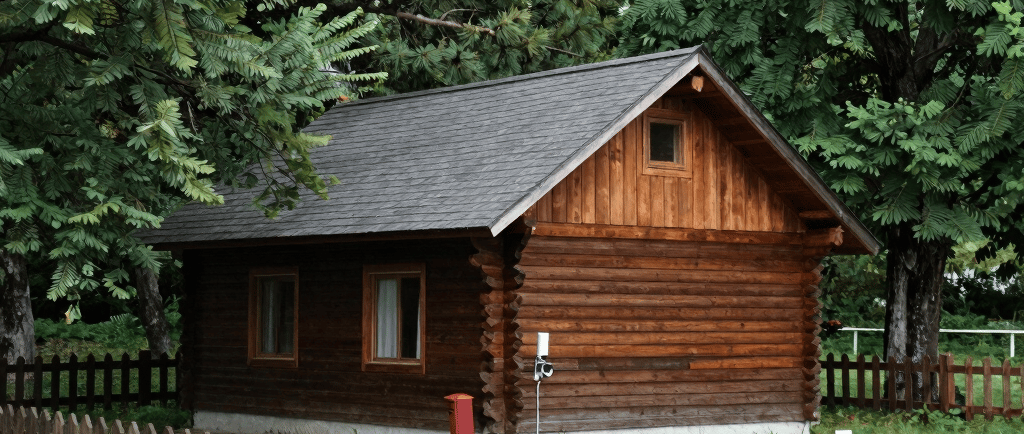
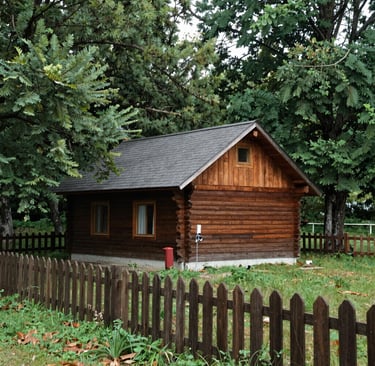
It's 2:47 AM. The owls are doing their thing. The creek is babbling like it hasn't got a care in the world. You're out there on your beautiful 40 acres of off-grid paradise, sleeping like a smug little prepper in your hand-built cabin, totally convinced that your remoteness is your greatest defense.
And then I walk past your property.
Now, I'm not a threat. I'm a peaceful, misunderstood forest dweller who just wants to eat berries and avoid FLIR cameras. But you know what I noticed on my midnight stroll past your homestead? Your generator running at full blast, advertising your presence like a Las Vegas billboard. Your motion-activated porch light blinking on every 45 seconds because a raccoon discovered it last Tuesday. Your unlocked ATV sitting in the open. And your dog — God bless him — snoring on the porch instead of doing literally any guarding.
I saw all of that, and I'm a mythological creature who allegedly doesn't exist.
If I can case your property, so can someone who very much does exist and has considerably worse intentions than eating your compost pile.
So, welcome to my guide. You came out here to be free, self-sufficient, and off the radar. Let's make sure you actually are.
The Myth of "Nobody Knows I'm Here"
Oh, sweet summer prepper. Bless your heart.
You moved 30 miles down a dirt road, you don't have a mailbox, and your property isn't on Google Maps. You figure that's enough. You figure obscurity is armor.
It is not armor. It is a thin cotton t-shirt in a hailstorm.
Here's who knows you're out there: the guy at the feed store you buy 200 lbs of grain from every month. The hardware store clerk who rang up your solar panel components. Your cousin who "totally won't tell anyone, I swear." The hunters who found your trail cam while looking for deer. The person who saw your truck parked off the highway at the same spot every Friday.
Rural areas are not anonymous. In fact, they're often less anonymous than cities. In a city, nobody notices you. In a rural county, people notice everything — they just don't always say something to your face. The postmistress three towns over knows more about your comings and goings than your therapist does.
Operational security — or OPSEC, for those of you who like acronyms — begins before you ever set foot on your property. It means being thoughtful about what you share, with whom, and when. It means not posting "just finished stocking my off-grid bunker!" on Facebook with a geotagged photo. It means understanding that your lifestyle, however admirable, makes you a target of curiosity at minimum, and opportunism at maximum.
You've put enormous effort into building something worth protecting. Start by not advertising that it exists.
Perimeter Awareness — Or, How I Know You Haven't Walked Your Own Land
Let me ask you something. Do you actually know every access point to your property?
I'm not being rhetorical. I genuinely want you to sit with that question, because most people who think they do — don't.
There's the main driveway, sure. You know that one. But what about the old logging road on the northeast corner that's mostly grown over but still passable by an ATV? The dry creek bed on the south side that becomes a natural pathway in summer? The gap in your fence line where the old post rotted out two winters ago and you kept meaning to fix it?
I know about those. I've used them. (Respectfully. To forage. Not whatever you're imagining.)
A proper perimeter assessment means physically walking every inch of your property boundary — not once, but regularly, and in different seasons, because terrain changes. What's impassable mud in spring is a highway in August. What's a visual barrier of leaves in summer is a see-through skeleton of branches in November.
Once you know your perimeter, you can layer your defenses intelligently:
Natural barriers are your first and best friends. Thorny hedgerows — hawthorn, osage orange, honey locust — are essentially free security fencing that also feeds wildlife and looks intentional. Dense plantings of native shrubs along fence lines don't scream "compound" the way chain-link and razor wire do. They whisper "farm" while actually functioning as a serious deterrent. Even I, with my legendary long legs, am not casually walking through a mature osage orange hedge at speed.
Fencing matters, but not all fencing is equal. A fence tells you where the property line is. It does not stop a determined person. What it does do is create a psychological and physical pause — a moment where someone has to make an active decision to trespass rather than just drift in. That pause matters. It separates the casually curious from the genuinely motivated, and it gives you a defined perimeter to monitor.
Gates and entrances are your choke points. A single well-monitored entrance is worth more than a thousand feet of unmonitored fence line. If you have multiple access roads, consider which ones you actually need open and whether the others can be blocked with a locked gate, a berm, or a strategically placed boulder that definitely just happens to be there.


Detection Systems for People Who Are Not Made of Money
Here's where I get to gently mock the prepper industrial complex for a moment.
There is an entire industry that would like to sell you $4,000 worth of integrated security technology for your off-grid homestead. Thermal cameras. Seismic sensors. Drone detection systems. A very earnest YouTube channel host with a tactical beard will explain why you need all of it.
You do not need all of it.
What you need is a layered detection approach that works with your lifestyle, your power budget, and the actual threat level you face. Which, for most off-grid homesteaders, is: opportunistic theft, curious strangers, and occasionally the neighbor's cattle.
Dogs. Let's start with the obvious, because it keeps getting overlooked. A good livestock guardian dog or a decent alert dog is worth approximately ten trail cameras and a Ring doorbell subscription. Dogs don't need WiFi. Dogs don't have firmware updates. Dogs don't fail because you forgot to swap the batteries. Dogs alert you to things that cameras miss entirely — smells, sounds, vibrations, the general wrongness that animals sense before humans do. If your dog is snoring through the night instead of alerting, that's a training problem, not a dog problem.
Trail cameras are legitimately useful and affordable. A handful of decent trail cams placed at your key access points — gates, trail heads, the road leading to your property — gives you a picture of who's moving around your area and when. The key word is placed thoughtfully. One well-positioned camera covers more than five poorly placed ones. Point them at natural choke points, not at open fields where they'll fill up with photos of deer and make you feel falsely surveilled.
Early warning systems don't have to be electronic. Gravel driveways are annoyingly loud and completely free. Wind chimes positioned strategically near entry points are old-school and underrated. The classic fishing-line-with-cans setup is laughed at in the movies and laughed at right up until it works. Even geese — those hostile little diplomats of the bird world — are legitimately used as perimeter alarms because they hate everything that moves and they are not quiet about it.
Driveway alarms with a range sensor alert you when a vehicle approaches your property. Basic models run $30-60, require no subscription, and work on battery or solar. This is not glamorous technology. It just works.
The goal isn't to build a surveillance state on your homestead. The goal is to make sure you know what's happening on your property before it happens to you.
The Light Problem (You Are Basically a Lighthouse)
I genuinely cannot stress this enough: your lighting situation is probably catastrophic from a security standpoint, and you haven't noticed because you're always inside.
Here is the thing about light at night in a rural area. It travels. It travels extremely far. That warm glow from your cabin windows? Visible for miles. That generator shed with the bare bulb you leave on "just in case"? I can see it from the ridgeline. That motion-activated floodlight that goes off every time the wind blows a branch? It might as well be a help signal.
Intentional lighting strategy means thinking about what you illuminate, and for whom.
Internal lighting should be managed with blackout curtains or interior shutters, especially if your property is visible from any road or elevated terrain. This isn't paranoia — it's basic light discipline, and it has the added bonus of keeping your home warmer in winter.
External lighting should be purposeful, not ambient. Motion-activated lights are excellent tools when they're positioned to illuminate threats approaching you, not to light up your property like a shopping mall parking lot. The light should startle an intruder and alert you — not show them exactly where everything valuable is.
Generator and outbuilding lighting is routinely ignored and routinely problematic. If your barn is lit up all night, it's advertising that something worth visiting is inside. Use timers. Use motion activation. Use darkness as a deliberate tool.
Night vision and thermal optics, for the homesteader who has the budget and inclination, flip the equation entirely. When you can see in the dark and a potential intruder cannot, that is a meaningful advantage. Even a basic monocular for checking the property at night costs less than a good trail camera setup and changes your situational awareness dramatically.

Hardening Your Structures (Because Locks Exist for a Reason)
I want to tell you something in the gentlest possible way.
A padlock from a gas station is not a security device. It is a suggestion.
Your structures — cabin, barn, storage sheds, root cellar, vehicle storage — are the physical containers of everything you've worked to build. They deserve actual security hardware. This means:
Doors with solid cores and proper frames. A deadbolt is only as good as the door it's mounted in and the frame around it. Hollow-core doors and soft wood frames can be kicked in by someone who ate a mediocre breakfast. Solid doors, proper deadbolts, and door frame reinforcement kits are boring but transformative.
Quality padlocks on outbuildings. There is a meaningful difference between a $12 padlock and a $60 hardened-shackle padlock. The difference is approximately the amount of time it takes to cut through them with bolt cutters. Invest in the latter for anything that matters.
Window security. Windows are doors that people try to pretend aren't doors. Secondary locks, window pins, or security film all add friction to forced entry. In a rural setting where no one will hear breaking glass, that friction matters.
Vehicle and equipment security. Your ATV, your tractor, your chainsaw collection — all of it should be secured in a locked structure when not in use. Equipment theft is the single most common crime targeting rural properties, and it is often opportunistic. An unlocked ATV on the porch is not an invitation. It is a completed transaction waiting to happen.
Layered access to your most critical supplies. Whether that's a medical kit, a communications setup, emergency food, or anything else you genuinely cannot afford to lose — it should have its own layer of physical security separate from your general property. Not because you're building a bunker. Because redundancy in protection mirrors redundancy in everything else you do as a prepared person.
Community — The Security Strategy Nobody Wants to Admit Works
Alright. I'm going to say something that will surprise you coming from a notoriously reclusive forest cryptid.
Know your neighbors.
I know, I know. You went off-grid specifically to minimize human contact. You have opinions about people. Your neighbors might be deeply eccentric individuals who collect vintage farm equipment and have strong opinions about the county commission. This is fine. You have strong opinions too. That's why you live out here.
But here is the cold, uncomfortable truth about rural property security: mutual awareness between neighboring landowners is one of the most powerful deterrents that exists. It costs nothing. It requires no power grid. It doesn't need a firmware update. And it functions beautifully even when everything else fails.
A neighbor who knows your truck, knows your schedule, and knows who does and doesn't belong on your property is an early warning system that no technology can replicate. A rural community where everyone is broadly looking out for unusual activity is a very difficult environment for anyone to operate in undetected.
This doesn't mean you have to go to potlucks or share your political opinions or explain your lifestyle choices. It means a wave when you pass someone on the road. A number exchanged in case something looks wrong. A general understanding of who belongs in the area and who doesn't.
Isolation is not security. Isolation is just alone.
A Few Words From the Woods
Look. You've done something genuinely hard and genuinely admirable. You've stepped off the grid, built something with your hands, and decided that your security and your freedom are worth investing in. That is not a small thing.
Don't let a few correctable gaps undermine it.
Walk your perimeter. Know your access points. Layer your detection. Get your lighting under control. Harden your structures. Invest in a real dog. And for the love of everything sacred, go introduce yourself to the person two properties over.
Your off-grid life is worth protecting. Protect it like you mean it.
Now if you'll excuse me, I have a trail camera to avoid and a berry patch to visit.
Stay safe out there. I'll be watching — but only from a respectful distance, and purely out of professional curiosity.
**Harold has never been photographed clearly enough to be identified, a fact he considers his single greatest security achievement and the culmination of a decades-long OPSEC strategy that no human operative has ever come close to replicating. He has appeared in over 10,000 reported sightings across North America and remains, officially, unconfirmed — which he finds both professionally satisfying and personally a little hurtful. His memoir, "You Were Looking Right At Me: A Study In Human Obliviousness," remains unpublished at his request, for obvious reasons. He has never once been tempted by a trail camera setup no matter how cleverly it was disguised as a hollow log. He does, however, take berries — specifically huckleberries, left at the base of a Douglas fir, no note required. He will know. He always knows.
© 2026. All rights reserved.